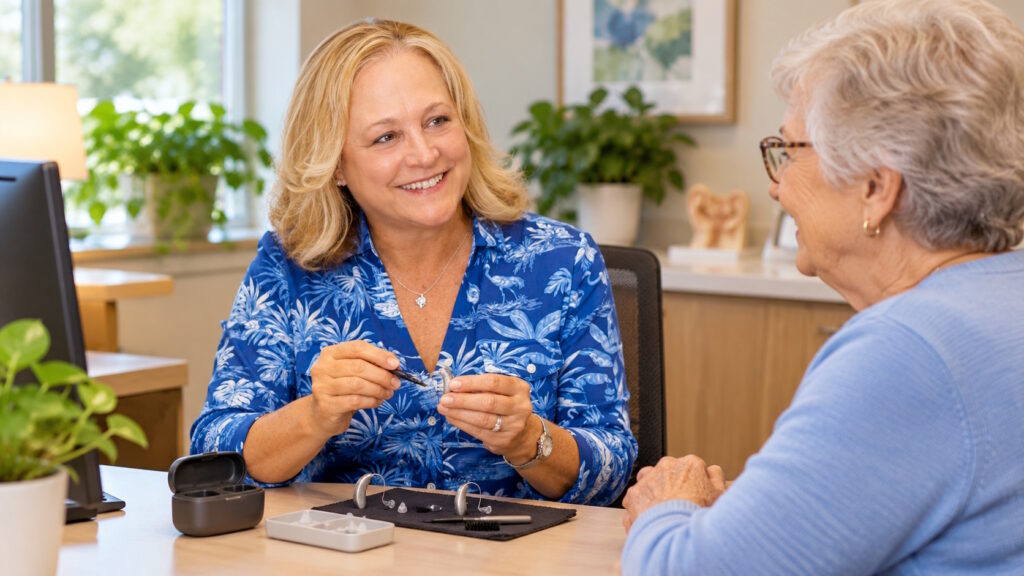
Getting hearing aids is an important step toward better hearing, but it is not the finish line. In many ways, it is the beginning of a new relationship with your hearing health.
Hearing aids are advanced pieces of technology, but they are also highly personal. They need to be selected, fit, programmed, adjusted, cleaned, and maintained based on your hearing needs, lifestyle, and comfort. That is why follow-up care is such an important part of hearing aid success.
At North Shore Hearing, we believe hearing care should include more than the purchase of a device. With Diane Faulknor, MA, CCC/A, patients receive personal guidance and ongoing support to help their hearing aids continue working for their everyday lives.
Why Hearing Aids Need Follow-Up Care
Many people assume that once hearing aids are fit, they should work perfectly right away. While some patients adjust quickly, it is also common for hearing aids to need fine-tuning over time.
Your brain may need time to get used to hearing certain sounds again. Everyday noises may feel louder at first. Restaurants, family gatherings, television, phone calls, and outdoor environments may all present different listening challenges.
Follow-up appointments give your audiologist the opportunity to make adjustments based on your real-world experience. These changes can help improve comfort, clarity, and overall satisfaction.
Hearing Aids Need to Be Adjusted to Your Life
No two patients hear the same way, and no two lifestyles are exactly alike.
One person may need help hearing conversations in restaurants. Another may want better sound while watching television. Someone else may struggle most in group settings, at church, during meetings, or while talking with grandchildren.
A hearing aid fitting is only the starting point. Follow-up care helps customize the hearing aids to your daily life.
During follow-up visits, your audiologist may adjust:
- Volume levels
- Sound clarity
- Background noise settings
- Comfort settings
- Programs for different environments
- Bluetooth or phone connectivity
- Feedback or whistling issues
- Fit and physical comfort
These small changes can make a big difference in how comfortable and useful your hearing aids feel.
The Adjustment Period Is Normal
Wearing hearing aids can take some getting used to, especially if you have been living with hearing loss for a while.
At first, certain sounds may seem surprising. You may notice your own voice more. Background noise may feel different. Sounds like footsteps, paper rustling, running water, or birds outside may suddenly seem more noticeable.
That does not mean something is wrong. It often means your ears and brain are adjusting.
Follow-up care gives you a chance to talk through these experiences with your audiologist. Diane can help explain what is normal, what can be adjusted, and what may improve with time and consistent use.
Cleanings Help Hearing Aids Perform Better
Hearing aids are worn in and around the ear every day, which means they are exposed to earwax, moisture, skin oils, dust, and debris.
Over time, buildup can affect sound quality or cause the devices to seem weak, muffled, or inconsistent. Regular professional cleanings can help keep your hearing aids working properly.
Cleanings may include checking microphones, receivers, domes, tubing, earmolds, battery compartments, charging contacts, and other small parts that can affect performance.
If your hearing aids do not sound as clear as they used to, they may not need to be replaced. They may simply need to be cleaned or checked.
Follow-Up Care Can Prevent Small Issues from Becoming Bigger Problems
Like any technology, hearing aids can develop small issues over time.
You may notice:
- Reduced sound quality
- A weak or muffled sound
- Feedback or whistling
- Trouble charging
- Shorter battery life
- Discomfort in the ear
- Difficulty connecting to a phone or app
- One hearing aid working better than the other
When addressed early, many of these issues can be corrected with a cleaning, adjustment, part replacement, or programming change.
Regular follow-up care helps catch problems before they become frustrating enough that you stop wearing your hearing aids.
Better Hearing Takes Partnership
Hearing aid success is not just about the device. It is about the relationship between the patient and the hearing care provider.
Your audiologist helps guide you through the process, but your feedback matters too. The more you share about where you hear well and where you struggle, the better your hearing aids can be adjusted to support your needs.
That partnership is one of the reasons patients choose a local audiology practice like North Shore Hearing. Instead of feeling like you are on your own after the purchase, you have someone available to help with questions, adjustments, cleanings, and long-term care.
Ongoing Support Is Part of the Value
When you purchase hearing aids through North Shore Hearing, you receive more than the devices themselves. You receive ongoing support for the life of your hearing aids, including adjustments, cleanings, follow-up appointments, and guidance.
That support matters because hearing aids are something you use every day. They are part of your conversations, your relationships, your routines, and your quality of life.
Having access to an experienced audiologist can help you get more value from your investment and more confidence in your hearing.
When Should You Schedule a Follow-Up Appointment?
You should schedule a follow-up appointment if:
- Your hearing aids do not sound as clear as they used to
- You are struggling in certain listening situations
- Your devices feel uncomfortable
- You hear feedback or whistling
- You are having trouble with batteries or charging
- Your hearing aids are not connecting to your phone
- You want them cleaned before a trip, event, or holiday
- You have not had them checked in a while
Even if everything seems fine, routine maintenance can help keep your hearing aids performing their best.
Hearing Aid Care That Continues After the Purchase
Hearing aids are not one-and-done. They work best when they are supported with professional care, patient feedback, routine maintenance, and occasional adjustments.
At North Shore Hearing, Diane Faulknor, MA, CCC/A, provides personal care and ongoing support to help patients feel comfortable and confident with their hearing aids.
If your hearing aids need a cleaning, adjustment, or checkup, or if you are considering hearing aids for the first time, North Shore Hearing is here to help.
Contact North Shore Hearing today to schedule an appointment.
Better Hearing. Personal Care. Ongoing Support.